Source metal axle sleeve rotary encoder for elevators, servo, and speed
Compare 30 metal axle sleeve rotary encoder options with incremental and absolute working principles. Buyers can review voltage, open collector, and long drive outputs alongside customizable shafts and various mounting types for industrial applications.
Key considerations
Products List


Comprehensive Sourcing Guide
Strategic Sourcing Guide for Metal Axle Sleeve Rotary Encoders
The global industrial automation sector relies heavily on precise motion feedback, with the metal axle sleeve rotary encoder emerging as a critical component for demanding environments. Sourcing these devices requires a disciplined approach that balances technical specifications with supply chain reliability. Buyers must navigate a complex landscape where attributes such as installation form, working principle, and signal output vary significantly across different product models. This guide provides a comprehensive framework for evaluating metal axle sleeve rotary encoders, ensuring that procurement decisions are grounded in verified data and industry best practices rather than unverified marketing claims.
Technical Architecture and Installation Form Factors
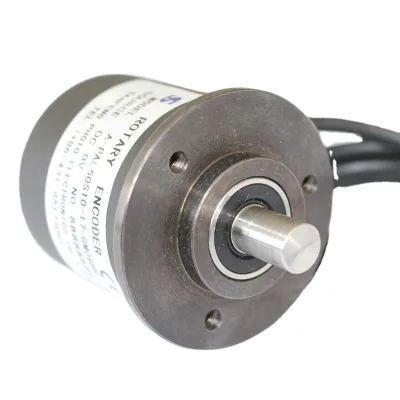
The fundamental distinction in sourcing metal axle sleeve rotary encoders lies in understanding the specific installation form and mechanical interface. The observed product data indicates that the "Axle Sleeve Type" is a primary category, with specific variations noted such as "Empty Type" and "Large Diameter Type." This classification is not merely semantic; it dictates the physical integration of the sensor into the machinery. An "Empty Type" sleeve suggests a design intended to slide over a specific shaft diameter, whereas a "Large Diameter Type" implies a robust housing capable of handling higher torque or larger shaft dimensions.
Furthermore, the "Mounting Type" is frequently listed as "Shaft," which often correlates with "Hollow Shaft" designs observed in the dataset. Hollow shaft encoders are particularly valuable in applications where the shaft passes directly through the encoder, eliminating the need for external coupling and reducing mechanical backlash. However, buyers must verify if the specific model supports a "Customizable" shaft, as the standard "Inner Cone 12" specification may not suit all machinery. The "Axonia" attribute, appearing as "Servo Installation Type" or "Clamping Flange Type," further refines the mechanical compatibility, indicating whether the unit is designed for direct servo motor integration or requires a flange-based mounting solution.
When evaluating the "Working Principle," the market presents a dichotomy between "Incremental" and "Absolute" systems. The data confirms the existence of both "Incremental Rotary Encoders" and units operating on an "Absolute" principle. Incremental encoders provide position relative to a reference point, requiring a homing sequence upon power-up, while absolute encoders retain position data even after power loss. The choice between these depends entirely on the application's need for safety, power redundancy, and initial startup procedures. Additionally, the "Readout Mode" varies between "Contact" and "Non-Contact" systems. A "Contact Brush Type" operating system, while traditional, may introduce wear and maintenance requirements, whereas "Photoelectric Type" or "Magnetoelectric Type" systems offer non-contact operation, enhancing longevity in dusty or high-vibration environments.
Signal Output and Electronic Performance Characteristics
The electrical interface of a rotary encoder is as critical as its mechanical design. The signal output capabilities observed in the supply chain range from "Voltage Output" to "Open Collector Output" and "Long Drive Output." These variations define the compatibility with the receiving controller or PLC. "Voltage Output" is standard for short-distance communication, while "Long Drive Output" suggests enhanced circuitry capable of driving signals over extended cable runs without significant degradation. "Open Collector Output" is often preferred for its ability to interface with a wider range of logic levels, though it requires specific pull-up resistor configurations.
The "Theory" behind the sensor technology also influences performance. The dataset identifies "Magnetic Sensor" and "Photoelectric Type" as dominant technologies. Magnetic sensors, utilizing the "Magnetoelectric Type" operating system, are generally more robust against contamination, oil, and moisture, making them ideal for heavy industrial settings. In contrast, photoelectric systems may offer higher resolution but can be susceptible to dirt accumulation on the optical lens. Buyers must also consider the "Output" type, which is described as a "Digital Sensor" in several listings. This confirms that the devices provide discrete digital signals rather than analog voltage ramps, which simplifies integration with modern digital control systems.
The "Operating Temperature" range of -10~+85 degrees Celsius represents a specific operational envelope observed in the data. While this range is suitable for many indoor industrial applications, buyers sourcing for extreme environments must verify if the specific unit meets these limits or if extended temperature ratings are available. The "Material" is consistently noted as "Metal," which provides structural integrity and heat dissipation, but the specific alloy or coating used for corrosion resistance should be confirmed during the supplier evaluation phase.
Compliance, Certification, and Standardization
Navigating the regulatory landscape is essential for international procurement. The provided data explicitly lists "CE" and "RoHS" certifications, which are standard requirements for selling electronic components in the European Union and many other global markets. CE marking indicates conformity with health, safety, and environmental protection standards, while RoHS compliance ensures the absence of hazardous substances. However, buyers should not assume that every listed product automatically possesses these certifications; verification of the specific batch or model is necessary.
Standardization is another critical area. The dataset references specific product standards such as "11mm," "18mm," "16mm," and "12mm," which likely refer to the outer diameter or mounting flange dimensions. Additionally, a specific standard of "54*40mm" is noted for a particular model. These numerical values are not universal; they represent specific form factors that must match the machinery's mounting holes and shaft sizes. The "prod_standard" field serves as a crucial reference for mechanical compatibility. When sourcing, buyers must cross-reference these standard dimensions with their existing equipment blueprints to avoid costly retrofitting.
The "prod_packing" is listed as "Carton," which is a standard shipping method, but the internal packaging for sensitive electronic components should be evaluated to ensure protection against static discharge and physical shock during transit. Furthermore, the "Package" type is noted as "SMD" (Surface Mount Device) in some contexts, which may refer to the internal component assembly or a specific packaging format for the encoder itself. Understanding these packaging details is vital for logistics planning and storage requirements.
Cost Drivers and Procurement Parameters
Understanding the cost structure of metal axle sleeve rotary encoders requires an analysis of the Minimum Order Quantity (MOQ) and customization capabilities. The observed MOQ range spans from 1 to 2000 pieces, with a specific high-confidence fact noting an MOQ of 2000PCS for certain models. This wide variance suggests that buyers can source small quantities for prototyping or testing, but volume production may require adhering to higher thresholds. The "Customization" attribute is marked as "Available" and "Support Customization," with "ODM" (Original Design Manufacturer) capabilities also noted. This implies that buyers can request modifications to the shaft size, cable length, or output signal, but such customizations will likely impact the MOQ and unit price.
The price range observed in the market is substantial, spanning from 0.11 to 5000 USD. This extreme variance is not indicative of a single product type but rather reflects the diversity of the category, ranging from basic incremental sensors to high-precision absolute encoders with advanced features. The "Elevator Encoder" description suggests that specialized applications, such as those requiring high safety ratings or specific speed profiles, command a premium. Buyers should be wary of prices that seem abnormally low, as they may indicate lower quality components or non-compliant products. Conversely, the upper end of the price range likely corresponds to encoders with robust metal sleeves, high-resolution output, and specialized certifications.
The "prod_origin" is listed as "China" and "Jilin, China," indicating the primary manufacturing hubs. While this provides insight into the supply chain geography, it does not inherently dictate quality. However, it does influence lead times and shipping costs. Buyers should factor in the logistics of sourcing from specific regions, especially if they require expedited delivery or have strict sustainability criteria regarding their supply chain.
Supplier Evaluation and Quality Assurance
Evaluating suppliers for metal axle sleeve rotary encoders requires a rigorous assessment of their technical capabilities and quality control processes. The presence of "ODM" support suggests that the supplier has the engineering capacity to modify designs, but buyers must verify their track record in delivering custom solutions. The "Factory Attributes" field confirms the manufacturing nature of the suppliers, but buyers should request evidence of their quality management systems, such as ISO certifications, even if not explicitly listed in the product data.
Quality control should focus on the consistency of the "Metal" material and the precision of the "Shaft" dimensions. Since the "Shaft" is listed as "Customizable," the supplier's ability to maintain tight tolerances on these custom dimensions is paramount. Any deviation in the shaft size could lead to mechanical failure or excessive wear. Additionally, the "Operating System" type, whether "Contact Brush Type" or "Photoelectric Type," must be validated through sample testing to ensure it matches the claimed performance.
Buyers should also assess the supplier's ability to provide detailed technical documentation, including datasheets that specify the "Signal Output," "Working Principle," and "Operating Temperature" ranges. The absence of clear documentation is a red flag. Furthermore, the "Certification" status must be verified through independent testing reports or valid certificates of conformity, rather than relying solely on the supplier's claims. The "Usage" as a "Speed Sensor" or "Angle Encoder" should be confirmed through application testing to ensure the device performs as expected in the intended environment.
Long-Term Procurement and Application Viability
Selecting a metal axle sleeve rotary encoder is not just a one-time transaction but a long-term partnership that impacts the reliability of the entire machinery system. The "Description" of the product as an "Elevator Encoder" highlights the critical nature of these components in safety-critical applications. In such cases, the "Working Principle" must be robust, and the "Readout Mode" must be reliable over thousands of operating cycles. The choice between "Incremental" and "Absolute" encoders will have significant implications for maintenance schedules and system downtime.
Buyers should consider the lifecycle of the component. The "Material" being "Metal" suggests durability, but the internal components, such as the "Contact Brush" or optical elements, have finite lifespans. Suppliers that offer "Customization" may also provide extended warranties or replacement programs, which can reduce the total cost of ownership. The "MOQ" of 2000PCS for certain models indicates that volume buyers may benefit from economies of scale, but they must ensure they have a stable demand to justify the commitment.
Finally, the "Standard" dimensions and "Axle Sleeve Type" must be future-proofed. As machinery evolves, the ability to source compatible replacement parts becomes crucial. Suppliers that adhere to widely accepted standards and offer a range of compatible models will be more valuable partners. Buyers should also consider the "Location" of the supplier in terms of supply chain resilience. Sourcing from "Jilin, China" or other regions requires an understanding of potential geopolitical or logistical disruptions. Establishing a relationship with a supplier that can provide consistent quality, timely delivery, and technical support is essential for maintaining operational continuity in the long term.
Conclusion
Sourcing metal axle sleeve rotary encoders demands a meticulous approach that integrates technical verification with strategic supply chain management. By carefully analyzing the "Axle Sleeve Type," "Working Principle," and "Signal Output" specifications, buyers can identify components that precisely match their application requirements. The observed data highlights a diverse market with varying MOQs, price points, and customization options, necessitating a tailored procurement strategy. Compliance with "CE" and "RoHS" standards, along with rigorous quality control of the "Metal" construction and "Shaft" dimensions, ensures that the selected encoders will perform reliably in demanding industrial environments. Ultimately, the success of the procurement process depends on the buyer's ability to navigate the complexities of the product landscape, leveraging the available facts to make informed decisions that balance cost, performance, and long-term reliability.
FAQs
What installation forms are available for metal axle sleeve rotary encoders?
The available installation forms include Axle Sleeve Type, specifically Empty Type and Large Diameter Type. Some models also support Shaft mounting or Clamping Flange Type for direct servo integration. Buyers must verify the specific sleeve type matches their machinery shaft dimensions before procurement.
Which working principles do these rotary encoders utilize?
These encoders operate on both Incremental and Absolute working principles. Incremental models provide relative position data, while Absolute models retain position after power loss. The choice depends on whether the application requires homing sequences or immediate position data upon startup.
Can these encoders be customized for specific shaft sizes?
Yes, customization is available with support for custom shafts and ODM services. Specific models offer Inner Cone 12 or Hollow Shaft designs, but custom dimensions may require higher minimum order quantities. Buyers should confirm shaft compatibility and customization lead times with the manufacturer.
What signal output types are supported by these devices?
Supported signal outputs include Voltage Output, Open Collector Output, and Long Drive Output. These options allow compatibility with various controllers and extended cable runs. The specific output type must be selected based on the receiving system's electrical requirements and distance constraints.
What certifications do these metal encoders typically hold?
Many listed models hold CE and RoHS certifications for compliance with European safety and environmental standards. These certifications indicate conformity with health and hazardous substance regulations. Buyers should verify specific batch certification rather than assuming all units possess these marks.
How does the operating temperature range affect usage?
The observed operating temperature range is -10 to +85 degrees Celsius. This range suits many indoor industrial applications but may require verification for extreme environments. Buyers sourcing for harsh conditions must confirm if extended temperature ratings are available for their specific model.
What is the typical minimum order quantity for these encoders?
The minimum order quantity ranges from 1 to 2000 pieces depending on the model and customization level. Some standard models require 2000 pieces, while others allow smaller test orders. Customization requests often influence the final MOQ and unit pricing significantly.